 Study in UK
 Study in Australia
 Study in Canada
 Study in New Zealand
Study in Canada
Affordable world-class education with one of the clearest routes to permanent residency. Canada is renowned for its high-quality education system, welcoming multicultural environment, affordable study options and attractive post-graduation opportunities. Tuition is typically lower than in the US or UK, and the Post-Graduation Work Permit plus Express Entry combination remains one of the most transparent student-to-PR routes in the world.

Tuition / year
C$18,000 – C$45,000
Living cost evidence
Approximately C$20,635 for 12 months
Work rights
Up to 24 hours per week off campus during study terms
Visa fee
C$150 study permit processing fee, plus C$85 biometrics
Six reasons students choose Canada.
And the trade-offs we make sure you understand before you commit.
Three universities in the QS world top 40
McGill (27), Toronto (29) and UBC (40) — global research reputations at Canadian tuition levels.
Clear student-to-PR route
PGWP work experience feeds directly into Express Entry and Provincial Nominee Programs.
Lower total cost
Tuition and living costs are typically well below comparable US and UK programs.
Work 24 hours a week
Off-campus work rights during study terms and full-time work during scheduled breaks.
Spouse work permit options
Partners of students in eligible programs can apply for an open work permit.
Safe, multicultural cities
Toronto, Vancouver, Montreal and Calgary consistently rank among the world’s most liveable cities.
Canada in numbers.
Figures are indicative and correct to the best of our knowledge as at September 2026. Government thresholds change — we verify each one against the official source before you lodge.
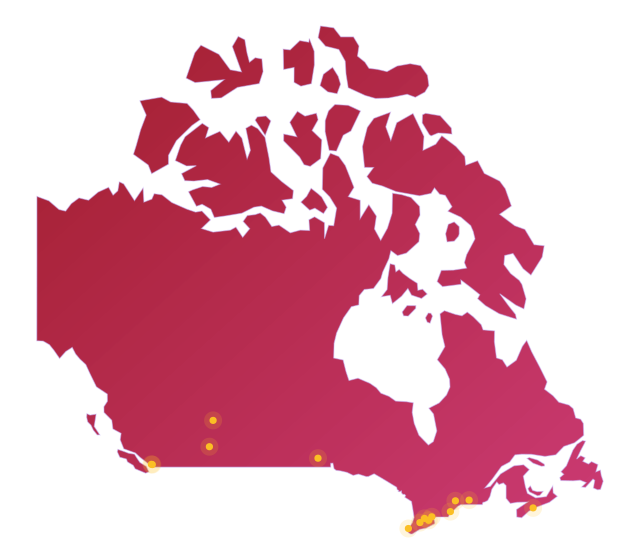
14 cities where we place students
- Intakes
- September (Fall — main) · January (Winter) · May (Summer — limited programs)
- Tuition
- C$18,000 – C$45,000 per year depending on program and institution
- Living cost evidence
- Approximately C$20,635 for 12 months (single applicant, outside Quebec)
- Work rights
- Up to 24 hours per week off campus during study terms, full-time during scheduled breaks
- Post-study work
- Post-Graduation Work Permit (PGWP) — up to 3 years
- Institutions in our network
- 15+ partner universities listed, many more available on request
Study permit — what it takes.
The requirements, the documents and the part of the process where most applications actually fail.
Requirements at a glance
- Visa type
- Study permit
- Application fee
- C$150 study permit processing fee, plus C$85 biometrics
- Health cover
- Provincial or private health insurance depending on the province
- Financial evidence
- Proof of funds of approximately C$20,635 for 12 months of living costs (single applicant outside Quebec), plus first-year tuition
- Typical processing
- Typically 4–12 weeks depending on country and completeness
Heads up: The cost-of-living threshold is adjusted annually — typically effective from 1 September. A Provincial Attestation Letter (PAL/TAL) is required for most applicants.
Documents you will need
- Valid passport
- Letter of Acceptance (LOA) from a Designated Learning Institution
- Provincial Attestation Letter (PAL / TAL) where required
- Academic records and transcripts
- Proof of funds — GIC, bank statements or education loan
- Statement of Purpose (SOP)
- Upfront medical examination where required
How Next Campus handles your Canada visa
- College and university admission guidance
- Study Permit eligibility assessment
- Financial requirement review
- Statement of Purpose (SOP) support
- Application preparation
- Visa application assistance
- Travel preparation guidance
Work rights & PR pathways
During study: Up to 24 hours per week off campus during study terms, full-time during scheduled breaks
After graduation: Post-Graduation Work Permit (PGWP) — up to 3 years — Field-of-study requirements apply to non-degree programs. Always confirm PGWP eligibility before enrolling — we do this as standard.
- Post-Graduation Work Permit of up to 3 years to gain Canadian work experience.
- Express Entry — Canadian Experience Class, where one year of skilled Canadian work makes you eligible.
- Provincial Nominee Programs (PNP) with graduate-specific streams in most provinces.
- Category-based Express Entry draws for healthcare, trades, STEM and French-language ability.
Canada universities we work with.
A selection from our Canada network. Click any university for rankings, indicative tuition, entry requirements and available study areas.
 QS #27
 McGill University
Montreal
C$27,000 – C$55,000
McGill University
Montreal
C$27,000 – C$55,000
 QS #29
 University of Toronto
Toronto
C$40,000 – C$65,000
University of Toronto
Toronto
C$40,000 – C$65,000
 QS #40
 University of British Columbia
Vancouver
C$38,000 – C$58,000
University of British Columbia
Vancouver
C$38,000 – C$58,000
 QS Top 100
 University of Alberta
Edmonton
C$28,000 – C$42,000
University of Alberta
Edmonton
C$28,000 – C$42,000
 QS Top 120
 University of Waterloo
Waterloo
C$45,000 – C$62,000
University of Waterloo
Waterloo
C$45,000 – C$62,000
 QS Top 150
 Université de Montréal
Montreal
C$25,000 – C$40,000
Université de Montréal
Montreal
C$25,000 – C$40,000
 QS Top 200
 McMaster University
Hamilton
C$32,000 – C$48,000
McMaster University
Hamilton
C$32,000 – C$48,000
 QS Top 200
 Western University
London, ON
C$35,000 – C$50,000
Western University
London, ON
C$35,000 – C$50,000
 QS Top 200
 University of Ottawa
Ottawa
C$30,000 – C$45,000
University of Ottawa
Ottawa
C$30,000 – C$45,000
They made this exact move.
“The team explained PGWP eligibility before I chose my program — my friend at another agency ended up in a course that did not qualify. That advice was worth everything.”
Canada questions, answered properly.
These are the five questions we are asked most often about Canada.
Ask a different questionWhat is a GIC and do I need one?
A Guaranteed Investment Certificate is a Canadian bank product that holds your living-cost funds and releases them to you in instalments after arrival. It is not compulsory for every applicant, but it is the cleanest way to evidence living costs and is strongly recommended for Student Direct-style applications.
What is a Provincial Attestation Letter (PAL)?
Since 2024, most study permit applicants must include a PAL or TAL issued by the province where they will study. Your institution requests it as part of your admission — we confirm it has been issued before we lodge your permit application.
Will my program qualify for a PGWP?
Degree programs at public universities generally qualify. For college diplomas and certificates, field-of-study requirements now apply. We verify PGWP eligibility for every program on your shortlist before you accept an offer — enrolling in an ineligible program is one of the most expensive mistakes a student can make.
Can my spouse work in Canada while I study?
Spousal open work permits are available for partners of students in eligible programs — generally master’s, doctoral and certain professional programs. We assess this as part of your course selection.
How much does it cost to study in Canada?
Tuition typically runs C$18,000–C$45,000 per year, with colleges at the lower end and research universities at the upper end. You must also evidence around C$20,635 in living costs for a single applicant outside Quebec.
Still weighing up destinations?
Most students we counsel change their mind at least once. That is a good sign — it means they are comparing properly.

Study in the UK
World-leading universities. Shorter degrees. Faster return on investment.
Explore
Study in Australia
World-class education, strong work rights and genuine migration pathways.
Explore
Study in New Zealand
All eight universities are state-funded, globally ranked and genuinely student-focused.
Explore
Find out if Canada is realistic for your profile.
Send us your results and budget. We will tell you which Canada universities will accept you, what it will cost in total, and what your visa will require — within one business day.
No obligation · Replies within one business day · Offices in Sydney, Dhaka & Sylhet